Perpetua Resources, US Army, and Idaho National Laboratory launch critical minerals pilot plant to advance antimony trisulfide supply

Perpetua Resources Corp, the U.S. Army and Idaho National Laboratory (INL), managed by Battelle Energy Alliance LLC, announced the opening of a new modular mineral processing plant. The pilot plant is designed to demonstrate and help establish a secure, end-to-end domestic supply chain for antimony, a critical mineral essential to U.S. national security. Idaho Gov. Brad Little, Lieutenant Gov. Scott Bedke, U.S. Representative Mike Simpson, and INL Laboratory Director John Wagner joined Perpetua President and CEO Jon Cherry for a ribbon-cutting ceremony marking the facility’s opening on July 29, 2026.
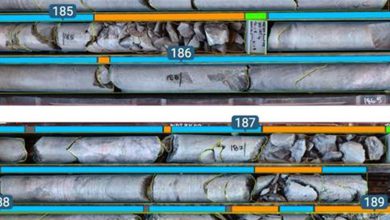
Located at the INL in Idaho Falls, the modular mineral pilot plant is designed to utilize antimony samples from Perpetua’s Stibnite Gold Project in central Idaho with the goal of demonstrating how to process high-quality antimony trisulfide for use in specialized military and industrial applications. Antimony is used in products ranging from defense munitions and battery technologies to solar glass and flame retardants. In recent years, China and Russia have dominated the global production of antimony, leaving the United States heavily reliant on foreign sources of the critical mineral. In 2021, China ceased providing the United States with the specialized form of antimony trisulfide essential for more than 300 types of ammunition. Shortly thereafter, the U.S. Department of War and Perpetua Resources entered into a strategic effort focused on advancing domestic antimony trisulfide production. Perpetua’s Stibnite Gold Project contains the only identified domestic reserve of antimony and is in development to provide a large-scale domestic source of the critical mineral alongside significant gold production.
“From the mountains of central Idaho to the national laboratories advancing America’s defense and energy capabilities, today’s milestone shows what’s possible when industry, government, and scientific innovation work together on practical domestic solutions,” said Jon Cherry, President & CEO of Perpetua Resources. “As construction advances at the Stibnite Gold Project, this pilot plant extends that momentum downstream by helping establish the capabilities needed to produce military-grade antimony materials here in America. Together, these investments are laying the foundation for a secure, end-to-end domestic supply chain that strengthens national security while creating long-term economic opportunity.”
The pilot plant combines the nation’s only identified domestic antimony reserve with INL’s advanced materials expertise to further advance innovation, train a skilled workforce, and strengthen the technical capabilities needed to rebuild commercial-scale domestic critical mineral production in America. The pilot plant is the culmination of a multi-year collaboration between the U.S. Army via the Defense Ordnance Technology Consortium (DOTC) and Perpetua Resources to advance a fully domestic, “ground-to-round” antimony supply chain. The facility also has the potential to support future processing of additional critical minerals, creating a scalable platform to strengthen U.S. supply chain resiliency.
“This pilot plant is more than a demonstration facility; it’s an investment in the nation’s critical mineral future,” INL Laboratory Director John Wagner said. “The data and operational experience generated here will help advance domestic antimony production while demonstrating how national laboratories, industry and government can work together to strengthen America’s supply chains and national security.”
“Establishing resilient domestic supply chains for critical minerals is vital to our national defense,” said Col. Steve Adcock, Portfolio Management Executive Ammunition & Energetics at Picatinny Arsenal. “This pilot plant represents an important step toward reducing America’s dependence on foreign sources of antimony while strengthening the industrial capabilities needed to support our warfighters. Partnerships like this help ensure the United States can reliably access the materials essential to military readiness.”
The pilot plant reflects years of federal collaboration to strengthen America’s domestic critical mineral capabilities. Support from Congress has helped advance partnerships among industry, national laboratories, and the Department of War to rebuild a secure domestic supply chain for antimony.
“We’ve worked to rebuild America’s critical mineral supply chains because our national security depends on them,” said U.S. Representative Mike Simpson (R-Idaho). “Today’s ribbon cutting is a significant milestone in that effort. By bringing together Perpetua Resources, the Idaho National Laboratory, and the U.S. Army, this project demonstrates how Idaho is helping strengthen our nation’s defense, expand domestic manufacturing capabilities, and reduce our reliance on foreign sources of critical minerals. I’m proud to have supported this partnership from the beginning and look forward to seeing the important role it will play for our country.”
The collaboration continues to position Idaho as a national leader in critical minerals, scientific innovation, and public-private partnerships that strengthen both the state’s economy and America’s security.
“This partnership between Idaho National Laboratory and Perpetua Resources is a major step toward securing America’s critical mineral supply chain and reducing our dependence on foreign-controlled resources,” said Idaho Governor Brad Little. “By combining Idaho’s abundant natural resources with world-class innovation, we are strengthening our national security, creating good-paying jobs, and reinforcing Idaho’s leadership in the industries that will power America’s future.”
Located in the historic Stibnite Mining District in central Idaho, the Stibnite Gold Project is one of the nation’s most strategically significant critical mineral projects. During World War II, the district supplied antimony and tungsten to support the American war effort. Perpetua Resources has designed the Stibnite Gold Project to redevelop the historic mine site for gold and antimony. After more than a decade of scientific study, engineering, environmental review, and stakeholder engagement, the Project received its final federal approvals in 2025 and advanced into early works construction. Early works activities are underway, including infrastructure improvements that will support full-scale development, positioning the Project to help restore America’s domestic antimony supply while delivering environmental restoration, high-quality jobs, and long-term economic benefits for Idaho and the nation.
Since 2022, Perpetua has been awarded over $87 million from the U.S. Department of War and the U.S. Army to advance the Project and America’s antimony supply. Perpetua has received more than $59 million in Defense Production Act Title III funds from the U.S. Department of War. In June 2026, Perpetua was awarded up to an additional $4.7 million under the DOTC program, increasing the total funding awarded to Perpetua from the U.S. Army to $27 million under the Ordnance Technology Initiative Agreement (“OTIA”) originally entered into between Perpetua Resources and the U.S. Army in August 2023.
Together, the pilot plant and the Stibnite Gold Project demonstrate how responsible resource development and innovation can restore America’s critical mineral supply chain, strengthen national security and reduce reliance on foreign sources.