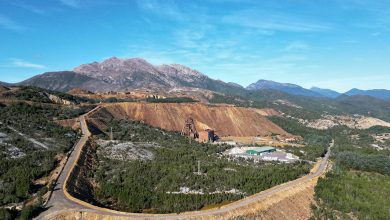
ICMM publishes new guidance to help mining and metals companies protect and restore biodiversity towards a nature positive future
Authored by: Press Release

According to the 2024 Living Planet Report, wildlife populations have seen a 73 percent average decline from 1970 through 2020, largely driven by climate change, deforestation, habitat loss, hunting, overfishing and other environmental impacts of food production. While the industry is dependent on the essential services provided by healthy ecosystems — such as reliable access to clean water, erosion prevention, and flood control — mining operations often intersect with areas of high biodiversity value and have also historically played a significant role in environmental degradation. Therefore, protecting and conserving nature is not just a responsibility — it is a business imperative.
“Nature and biodiversity loss are a critical global challenge, placing wellbeing and livelihoods of people, ecosystems and our global economy at significant risk,” said Hayley Zipp, director of environment at ICMM. “Committing to achieve no net loss or net gain of biodiversity at mining and metals operations is essential for our industry to contribute to the global goal of halting and reversing nature loss.”
ICMM’s Good Practice Guide for Achieving No Net Loss or Net Gain of Biodiversity outlines a seven-step process, applicable at each stage of the mining lifecycle from a project’s design to post-closure and production, to help companies establish baseline assessments, apply the mitigation hierarchy and transparently disclose progress towards their no net loss, or net gain, goal. It is a technical resource designed for practitioners at site level and corporate professionals overseeing sustainability and biodiversity strategies to help scale and accelerate the implementation of these approaches across the industry.
ICMM’s guidance builds on decades of experience and lessons learned by their members in rehabilitation, restoration, and no net loss strategies. By integrating real-world examples and global insights, this guidance can help mining and metals companies, regardless of their size, maturity level or location, achieve no net loss or net gain of biodiversity
“But we must go further. Building a nature-positive future requires multi-stakeholder collaboration, innovation, and accountability,” said Zipp. “That’s why our members have committed to taking nature action across the value chains, landscapes and systems we operate in. We urge companies across the industry—and those managing significant land areas in other sectors—to take the lead in making commitments that help protect and restore nature for the benefit of all.”
This new guidance aims to help ICMM members achieve their direct operation commitments set out in ICMM’s Nature Position Statement. Guided by the Kunming-Montreal Global Biodiversity Framework (GBF) and shaped by experts and leaders from across industry, civil society, Indigenous Peoples groups and finance, the position statement signifies a collective promise to contribute to a nature positive future across four areas of influence: direct operations, value chains, landscapes and systems transformation. Commitment 1.3 of the Position Statement requires achieving no net loss or net gain of biodiversity by closure for all existing mining operations from a 2020 baseline or earlier, and for all new operations and significant expansions against a pre-operation or pre-expansion baseline, respectively.